

News
Delhi AQI reaches ‘hazardous’ levels on Tuesday as smog worsens; GRAP Stage 4 restrictions imposed.
By Gonukkad

November 18, 2024
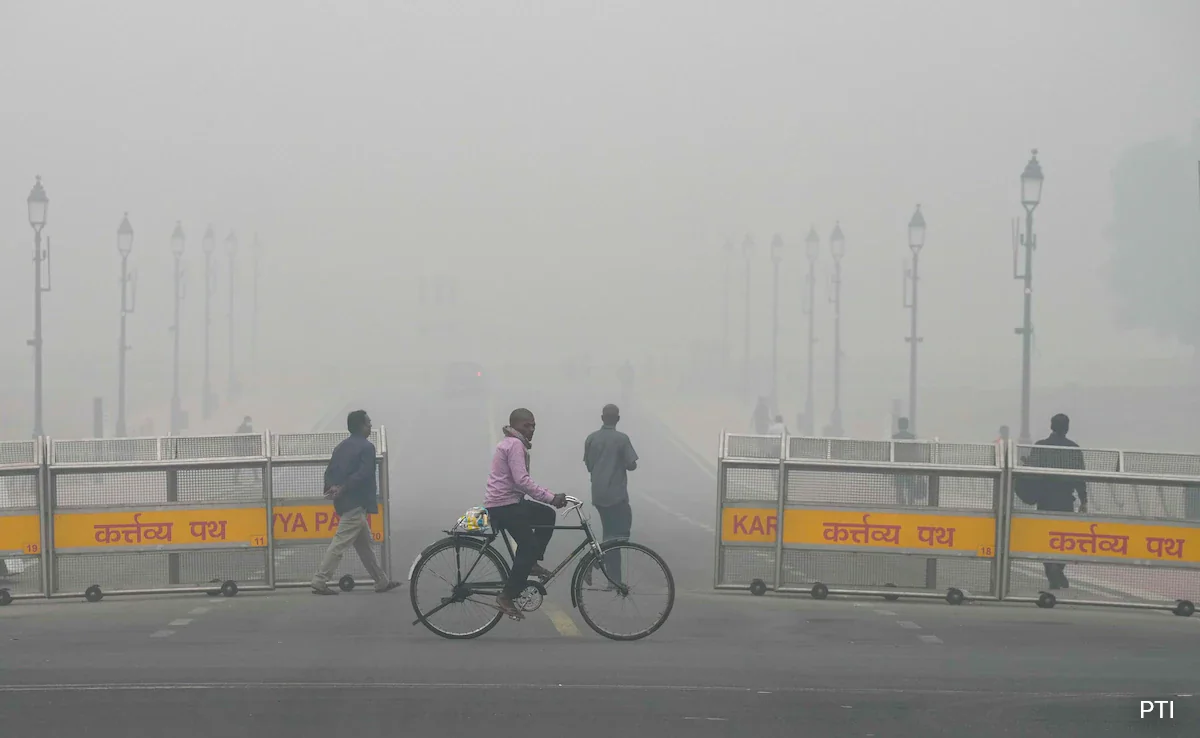
New Delhi, Nov 18, 2024: Toxic fumes started to engulf the Delhi city with an air quality index that soared into hazardous territory at 481-a new high for the past several times-sending the capital besieged by one of its worst environmental crises as thick smog blankets the city. This noxious haze, a deadly mix of smoke, fog, and dust, has covered Delhi in a deep layer of suffocation that reduced visibility drastically and caused severe risks to the health of its residents. So dire is the situation that it has led to widespread concern for public health and daily life.
The current AQI of Delhi presented in real-time data released by the System of Air Quality and Weather Forecasting and Research comes as high as 481, which is the worst this season so far. Air quality in places like Jahangirpuri saw the AQI level shoot up to 700, pushing air quality into the "severe-plus" category of smog worsens-a direct result of the mix of high vehicular emissions, industrial pollutants, and crop burning in nearby states.
An AQI greater than 450 falls into the "severe-plus" category of the AQI scale which ranges between 0 and 500. Levels between 0 and 50 fall within the "Good" category, and anything over 400 is deemed severe. Shattering levels of air pollution witnessed today have prompted immediate action from authorities.
The CAQM has issued GRAP Stage 4 measures, which constitute an aggressive set of steps to check emissions and curb pollution. The major actions are:
Ban on Truck Entering Delhi: All the non-essential truck lanes entering into Delhi have been prohibited, except for trucks carrying essential commodities or running on alternative fuels like LNG, CNG, or electric power. Again, this aims at checking increased emissions from diesel-run trucks that drastically contribute to poor air quality.
Suspension of Construction Activities: All construction activities including roads, flyovers, etc. are suspended for the time being since dust and PM2.5 in the air are not desirable.
Colleges to close and online classes: All physical classes are suspended for the students in all classes except classes 10 and 12. The schools are closed for online classes till further notice. The primary school is also closed, and outdoor activities in school have been suspended.
Guidelines for workplaces: The government has advised offices in Delhi-NCR to work with 50% attendance with the rest working from home. Measures on work from home are also being contemplated by central government officials.
The air quality index of Delhi is severely hazardous for all health conditions, especially of sensitive groups, that is, children, the elderly, and others having existing lung diseases like asthma and COPD. Delhi air pollution has already caused an increase in cases admitted to hospitals in case of breathing difficulties. The smog is toxic as it contains higher concentrations of particulate matter (PM2.5), which causes much damage to the air and also makes it extremely challenging for people to carry out their daily activities without proper protection. CAQM in its advisory to people has told them to stay indoors and avoid carrying out outdoor activities. Experts suggest that people wear N95 or P100 masks, limit the time spent outside when in the open, and avoid venturing out without proper mask coverage.
As of now, the highest AQI in Delhi has recorded a shocking 762 in certain parts of the city and has surpassed all known thresholds for the "severe" and "hazardous" categories. For days on end, smog and poor air quality have been persistent across the city due to factors like vehicular emissions, stubble burning in other neighboring states, and weather conditions that have kept pollutants captured in the atmosphere.
Delhi will be prepared for even harsher action to check pollution in town as air quality continues to remain terribly hazardous. Low winds and below-normal cold temperatures have been forecast by the India Meteorological Department for the next few days, which ensures that pollutants are trapped in the atmosphere today, meaning air quality in Delhi will not improve clearly.
Under GRAP Stage 4, immediate measures have been taken, but experts underline the need for long-term remedial measures for the pollution affecting Delhi. As much as 38 percent of the capital city's air pollution this year has been the result of stubble burning, which goes on unchecked in neighboring Punjab and Haryana, worsening the seasonal smog woes of the city.
With AQI levels at severe-plus levels in Delhi, the smog spell has come to pose a massive threat to public health and daily activities along with transport. The new restrictions now force all the government to ask the residents to take precautions, but unless even more sustainable long-term measures are undertaken, this fight of Delhi against smog and pollution will continue.

Love is in the Air for the Akkineni Family



NTPC Green Energy IPO Allotment Status: How to Check the Time and Date
This Website is Managed & Owned by | GoNukkad